Conversations That Matter
Brent Sobol on Generosity, Responsibility & a Life of Service
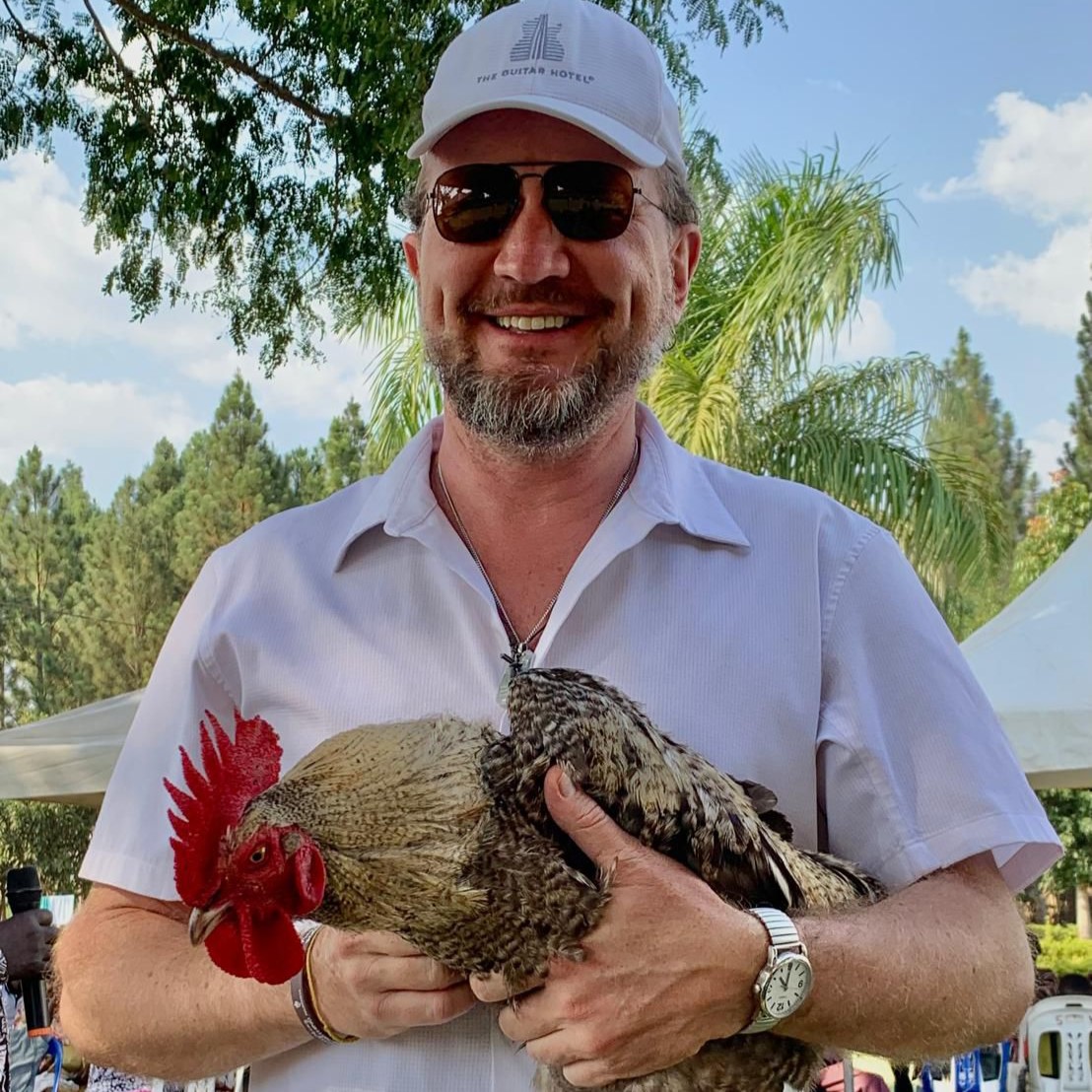
The greatest investment we can make is in people.
In a world that often measures success by net worth, status, and influence, Brent Sobol represents a different philosophy: that the greatest investment we can make is in people.
A businessman and philanthropist whose work extends across continents, Brent is a founding member of Legacy Community Engagement Corporation, established in 2009 with a mission to improve the lives of underserved communities through education, healthcare, children’s welfare, economic empowerment, and community development.
What makes Legacy particularly fascinating is its approach to philanthropy. Rather than relying primarily on traditional fundraising, the organization has developed a model that connects business investment with charitable impact. Through returns generated from impact investments in more than 200 companies, Legacy helps finance initiatives designed to create meaningful and sustainable change.
Its work has reached communities across Africa, including Uganda, Cameroon, Zimbabwe, Nigeria, and Burkina Faso, reflecting a commitment not simply to providing assistance, but to creating opportunities and improving lives.
Yet behind the scale of these initiatives is something equally remarkable: the man himself.
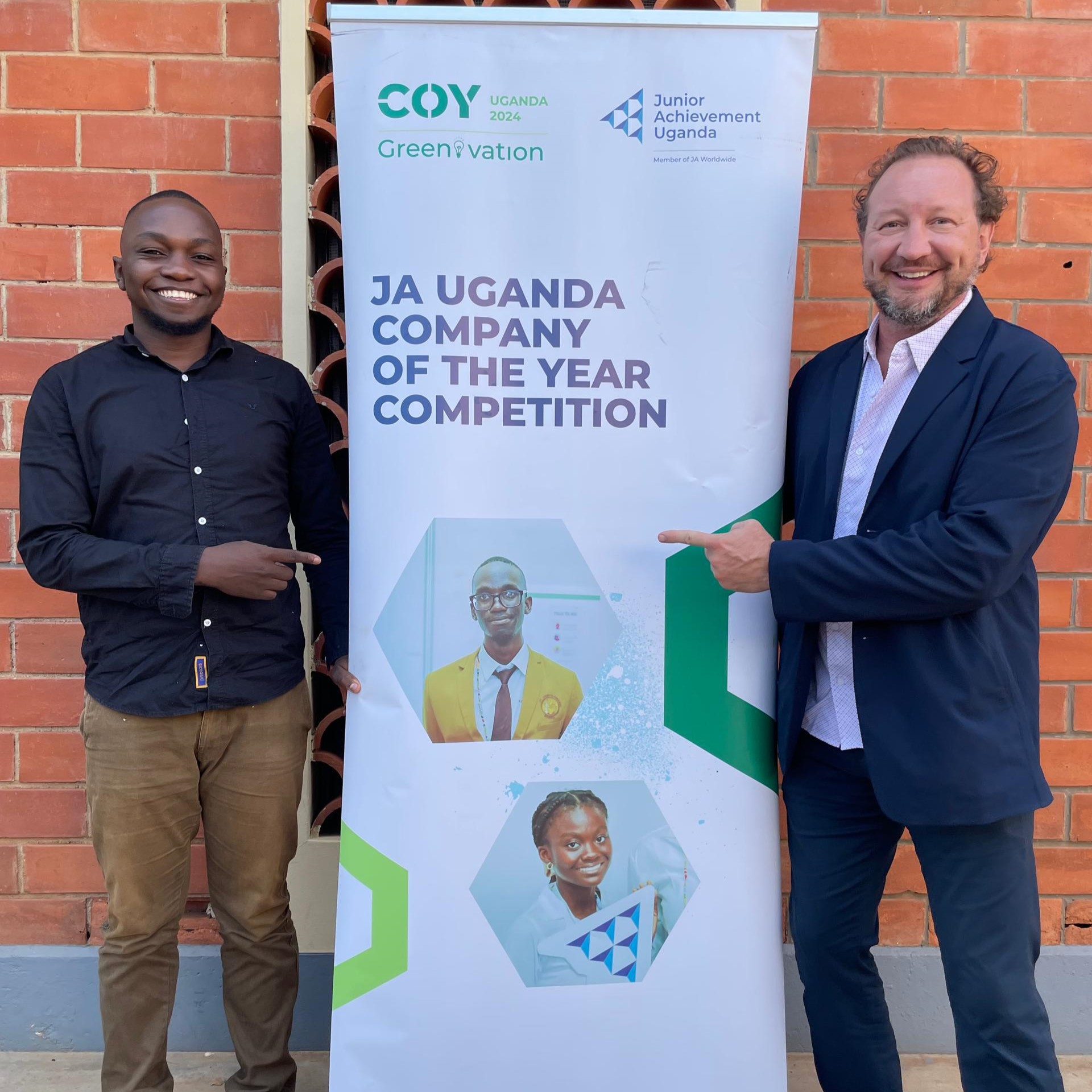
I recently had the pleasure of having dinner with Brent shortly after his return from Mauritius, where he had been involved in charitable work: teaching high school business classes. Despite having just returned from a journey dedicated to helping others, he arrived with thoughtful gifts.
It was a simple gesture, but one that stayed with me. There was something deeply touching about a man who devotes so much of his time and resources to others still finding the time to extend a personal kindness.
To me, it spoke to something fundamental about generosity. It isn’t always measured by the size of a contribution or the scale of an initiative. Sometimes, it’s revealed in the smallest, most thoughtful gestures.
And perhaps that is what makes Brent’s story so compelling. Beyond the businesses, investments, and philanthropic initiatives is a person whose generosity appears to be woven into the way he lives. I wanted to understand what inspires that commitment. What drives someone to invest so much of themselves in improving the lives of others? What responsibilities come with having the ability to make a difference? And what does a life dedicated to service truly look like?
I sat down with Brent Sobol for a conversation about generosity, responsibility, and a life of service.
The Conversation
Jessica Mutuku:
Brent, welcome to Conversations That Matter. You recently returned from Mauritius, where you’ve been involved in charitable work. I’d love to begin there. What took you to Mauritius, what were you hoping to accomplish, and what did that experience mean to you personally?
Brent Sobol:
I’m a graduate of the Junior Achievement program from my high school years. JA taught me about business, and now I enjoy speaking to Junior Achievement programs in developing nations and giving words of life and business experience and encouragement. I was invited to speak to seven classes in Mauritius.
Jessica Mutuku:
Your philanthropic work has taken you to different parts of Africa, supporting communities through education, healthcare, children’s welfare, and economic empowerment. What first drew you to Africa?
Brent Sobol:
Africa gets a bad rap in the global press for reasons we are all aware of. I wanted to see what was really there with my own eyes. What I found is a joyous people that are humble and full of tradition. I’m shocked at the number of orphanages there and at how poorly the governments provide the basics of life. Every American should visit Africa and experience it.
Jessica Mutuku:
Something I find fascinating about Legacy is its approach to philanthropy. Rather than depending primarily on traditional fundraising, you’ve connected investments in businesses with the funding of charitable initiatives. What inspired that model? And do you believe the future of philanthropy lies in creating sustainable ways to finance generosity rather than relying solely on donations?
Brent Sobol:
The current philanthropy model of rich people giving to a charity year after year so that money intermediary can then divvy it up to their pet projects didn’t excite me. Donors rarely interact with the recipient, I presume, because it’s too painful to do so. When my company had a windfall of profit and I realized that I could avoid tax and fulfill my life mission of being a big giver, I created this charity, Legacy Community Engagement Corporation. Our model is simple. Grow the money pile with responsible, human “Impact Investments,” and then take distributions every year and give it to causes that stop suffering. As the leader of this I have to be savvy because I have to find the ‘right’ investments while simultaneously sourcing the ‘right’ charities. I enjoy my work, but it’s tricky to do.
Jessica Mutuku:
You’ve chosen to commit your personal resources to making a difference. I’m curious about the philosophy behind that decision. Why has it been important to you to give from your own money and resources, and what does that personal commitment mean to you?
Brent Sobol:
When you start taking other people’s money you have to be beholden to their thinking and all that goes with managing their emotions. I founded Legacy and funded Legacy. So I direct it, because I know what’s best in my heart for my causes. And my volunteer board of directors agrees with my philosophies on self-sustaining giving and funding solutions uniquely that solve suffering.
Jessica Mutuku:
With so many worthy causes and so much need in the world, how do you decide where to direct your time, energy, and resources? Is there something about a particular person, community, or situation that immediately moves you to act?
Brent Sobol:
I let the Holy Spirit guide us. I look for projects where under $5,000 can make a huge huge huge huge huge difference in people’s lives. 5,000 to the United Way or Salvation Army does nothing. But I can give to five small but effective causes and maybe change 50 lives for that money.
Jessica Mutuku:
You’ve met people from very different backgrounds and circumstances through your philanthropic work. Is there one person you’ve encountered whose story has stayed with you, perhaps someone who changed the way you see life?
Brent Sobol:
I had never been to an orphanage until 2022 in Cameroon, and seeing and playing with orphans radically changed my worldview. We don’t have orphanages in America anymore. These children were so happy despite having nothing material. So we’ve now funded 13 different orphanages in seven countries. Well, that’s the power of meeting someone in an instant that changes your worldview. We met a class of society that was very different than us and we took action.
Jessica Mutuku:
I’d love to go back to the beginning of your own story. Before Legacy, before the businesses and philanthropic initiatives, what were your early ambitions? Did you always imagine you’d spend so much of your life helping others?
Brent Sobol:
The Christian ethic says you have to help people and be a good neighbor and I’ve been doing that my whole life. It’s just now that I’m 50, the projects and the dollars and the impact are bigger.
Jessica Mutuku:
You’ve built businesses and recognized opportunities throughout your career. When you look back, what was one of the most defining decisions you made, something that ultimately changed the course of your life?
Brent Sobol:
I think pure capitalism is broken because it doesn’t value people enough. But business and entrepreneurism is the only model in the world that moves things significantly so I’m good at that, and now I deploy those skills in manners of charity. The universal language is money. Specifically the American Dollar.
Jessica Mutuku:
Entrepreneurs often speak about success, but I think the difficult moments reveal just as much about a person. What’s been one of your greatest challenges, and what did it teach you about yourself?
Brent Sobol:
Never give up. There’s always somebody or something worth fighting for.
Jessica Mutuku:
I’m curious about the relationship between business and philanthropy. Has your experience as an entrepreneur influenced the way you approach charitable work? Do you find yourself thinking about problems and solutions differently because of your business background?
Brent Sobol:
I think the only grand solution to big charity is to apply business principles to it. The largest nonprofits are run like businesses. You get everybody’s incentives in alignment, you create a business plan and then you take action. Whenever we give a gift, we want that money to be catalytic for something to inspire or be really meaningful in some special way. That’s the entrepreneurial spirit in us.
Jessica Mutuku:
I want to ask you something about generosity itself. Do you believe generosity is something we’re born with, something we learn, or something that develops through our own experiences?
Brent Sobol:
I don’t know. Probably all. I do think it’s crazy that most Americans wait until they’re near death to give away most of their fortune to avoid taxes. If they were generous along the way they would feel a lot better about themselves. And they could see the fruits of their hard-earned money changing the world for the better.
Jessica Mutuku:
You’ve dedicated considerable time and resources to improving the lives of others. But I wonder, has there ever been a moment when someone you were trying to help ended up giving you something far more valuable than anything you could have offered them?
Brent Sobol:
This is a great question because what addicts me to missionary work are the surprising humanity revelations that come from interacting with people who are struggling. I experience them all the time. I wonder when people tell me my generosity inspires them because it indicates that they don’t have many other people in their lives who are generous. And that makes me sad.
Jessica Mutuku:
Let’s shift gears for a moment. I want our readers to get to know Brent beyond the businesses and philanthropy. Paint me a picture of a day in the life of Brent Sobol. What time do you wake up? What’s the first thing you do in the morning, and how does a typical day unfold?
Brent Sobol:
My wake-up is my prayer time.
Jessica Mutuku:
What keeps you up at night? Is there a particular issue in the world or something more personal that occupies your thoughts?
Brent Sobol:
The digitization of everything is leading to not obvious dehumanization. Computers were supposed to serve us but now we are serving them. Particularly younger people have become victimized. Parents are confused. And we accept this as a society because we aren’t sure what to do about it.
Jessica Mutuku:
You’ve traveled, built businesses, and experienced so much of what life has to offer. What’s something you still want to experience in your lifetime that you haven’t already?
Brent Sobol:
I’d like to get married to a classy lady that’s just as quirky and curious as I am about life. Perhaps a billionaire so she can joyously fund all of my BOLD & adventurous philanthropy ideas.
Jessica Mutuku:
(Laughs) A billionaire, Brent? I know you have quite the sense of humor! But on a more serious note, let’s talk about marriage. What does your ideal partner look like beyond the obvious qualities? What kind of connection are you hoping to find? And, just in case there are some eligible ladies reading this, here’s your chance to tell them what they should know!
Brent Sobol:
(Awaiting response)
Jessica Mutuku:
One thing I’ve personally noticed about you is that you’re quite the gentleman, thoughtful, considerate, and chivalrous. Is that something you learned growing up, perhaps from the example set by your family, or has it developed through your own experiences? I’m curious, and I’m sure the ladies reading this will be too!
Brent Sobol:
(Awaiting response)
Jessica Mutuku:
People know Brent Sobol the businessman and Brent Sobol the philanthropist. But there’s always more to a person than what the world sees.
What do you want people to know about Brent Sobol that most people don’t?
Brent Sobol:
Very little came easy to me. People look at me and think life is easy. Everyone’s daily charge should be to find different ways to love and serve God and humanity. Givers have much better lives than the parsimonious.
Jessica Mutuku:
Despite all your success and accomplishments, what strikes me about you is how incredibly down-to-earth, humble, and approachable you are. You have a natural way of making people feel comfortable, regardless of who they are or where they come from. In a world where success can sometimes change people, what has kept you so grounded? Were these values instilled in you growing up, or have your life experiences shaped the person you are today?
Brent Sobol:
(Awaiting response)
Jessica Mutuku:
What brings you the greatest joy these days? Not necessarily the big accomplishments, but the little moments that make life meaningful.
Brent Sobol:
Seeing my only child grow up as a responsible lady. Seeing our stop-suffering projects be effective.
Jessica Mutuku:
If you could sit down with your younger self, knowing everything you know today, what’s one piece of advice you’d give him? And do you think he’d listen?
Brent Sobol:
Don’t worry so much. Everything will work itself out if you keep taking action with good intent.
Jessica Mutuku:
I believe that we can create a better world, but I also know that many people feel they don’t have the resources or influence to make a meaningful difference. What would you say to someone who wants to help others but doesn’t know where to begin?
Brent Sobol:
Every human has time, talent, and treasures that can be shared. Start by giving something away to a stranger and see how that makes you feel.
Jessica Mutuku:
When you look at the world today, what gives you hope? Have you witnessed something through your work that reminds you of the extraordinary good people are capable of?
Brent Sobol:
Alcohol and tobacco use is declining. Younger people are choosing to go to church. We know how to deal with trauma today better than we ever have. There are more millionaires in the world than ever before. Psychedelic medicine will soon be legal by the FDA.
Jessica Mutuku:
Looking ahead, is there something you still dream of accomplishing through Legacy? A particular project, community, or cause that you hope to make a difference in?
Brent Sobol:
I want big nonprofit foundations that are sitting on piles of cash to mindfully impact invest that money rather than mindlessly and soullessly buying bonds or indexed mutual funds. Think of how much world change that huge amount of strategically invested capital would shift society. I think foundations with investments have a moral obligation to impact invest… but very few do. Why not? Can we talk some sense into these people?
Jessica Mutuku:
Finally, Brent, when you think about the life you’ve lived and the lives you’ve touched, what do you hope people will remember about you?
Brent Sobol:
That seeing Brent’s kindness inspired me to be a better person. He was a very good man and he kept things real.